Compared
American vs Chinese Mahjong Tiles, Compared
Same heritage. Different tables. What changes between an American set and a Chinese one — and what to choose.
May 10, 2026 · 6 min read
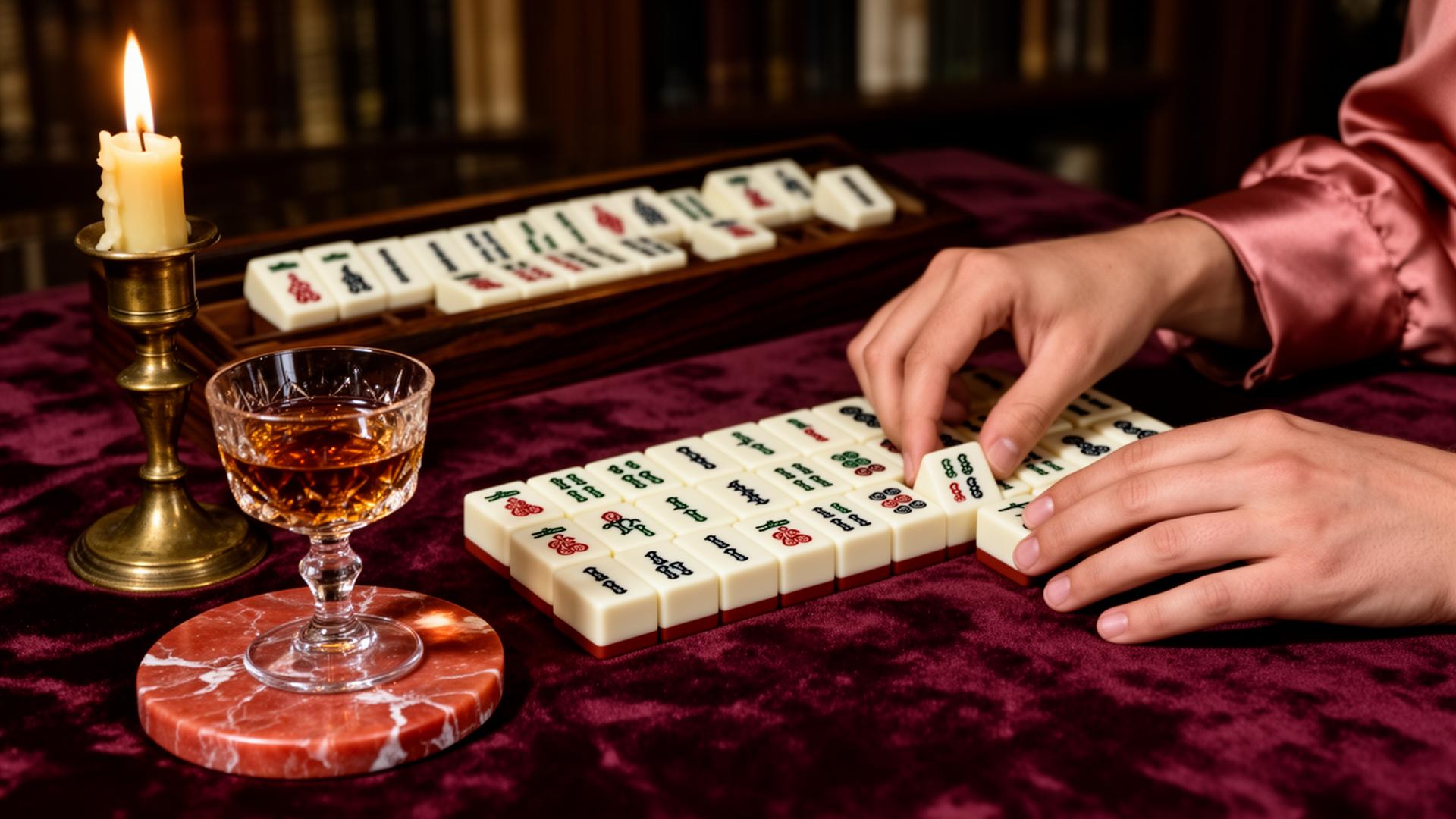
American mahjong was adapted from Chinese mahjong in the 1920s, primarily by Joseph Park Babcock and the National Mah Jongg League that followed. The tiles look almost identical. The game is not.
Tile counts
A Chinese set contains 144 tiles: 108 suits, 16 winds, 12 dragons, and 8 flowers. An American set carries 152 — the same 144, plus 8 jokers — and most retail sets ship with 166 to include spare blanks for repair.
Jokers
Jokers are the defining American addition. They substitute in pungs, kongs, and quints — never in pairs, singles, or NEWS sets. Chinese mahjong has no jokers at all. If you play with both crowds, look for a set whose jokers can be quietly removed; many maisons supply them in their own tray.
Racks
American racks are taller and have a built-in pusher, because the American game uses a pre-printed annual card that the player consults during the hand. Chinese racks are shorter, often open at the back, and rely on a community pusher.
Engraving and color
American sets favor brighter, broader engraving — the league's annual card needs the suits to read at a distance. Chinese sets are often more restrained: thinner lines, deeper carving, more red and green and less yellow. Neither is more authentic than the other; they were designed for different rooms.
Which set to buy
If you play American mahjong on Sunday afternoons in the United States, buy an American set. If you play Cantonese, Hong Kong, or mainland rules with family, buy a Chinese set. If you play both, buy two — and if that feels excessive, choose a high-quality American set and tuck the jokers away when the Cantonese cousins come over.
Continue Reading
From the Journal
Learn · 7 min
Mahjong Tiles Explained: Suits, Honors, Flowers, Jokers
A walking tour of the 152 tiles in an American set, in the order you will meet them at the table.
Learn · 9 min
How to Play Mahjong: A Beginner's Guide
Eight short steps from sitting down to calling mahjong. Everything else, you learn at the table.
Buying Guide · 7 min
Where to Buy an Authentic Mahjong Set
The market is crowded. The honest sets are not. Here is how to tell them apart.