Learn
How Mahjong Is Played: Turn Order, Charleston, Winning
The rhythm of a round, in plain language — what happens, in what order, and why.
May 13, 2026 · 7 min read
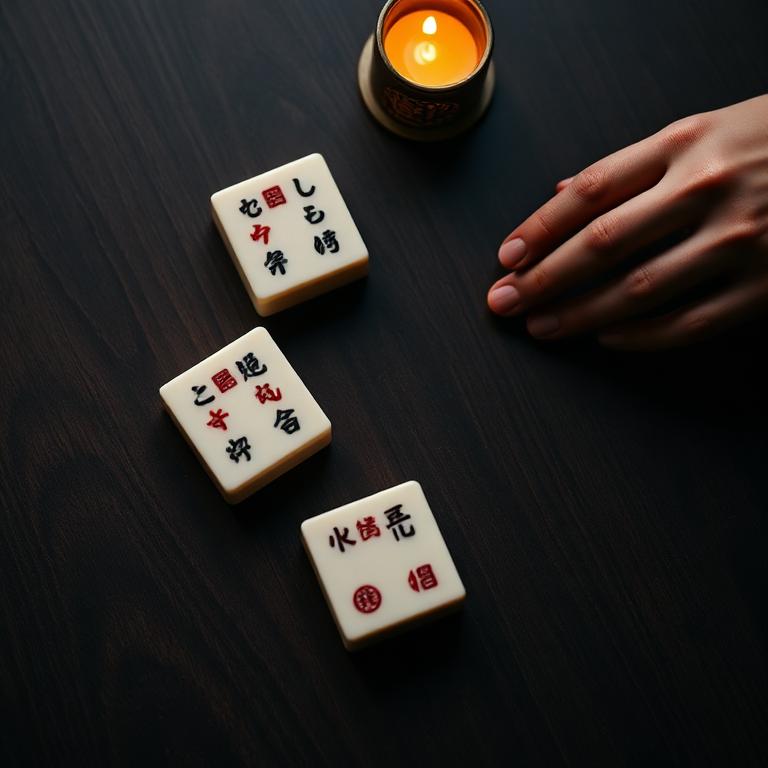
American mahjong unfolds in a sequence that sounds intricate on paper and feels obvious in person. The mechanics are the same every hand: build, deal, exchange, draw, discard, expose, win. Once the rhythm is in your hands, the rules vanish and the game starts.
Turn order
Play moves counter-clockwise — East to North to West to South. East deals first and plays first. After each completed hand the deal rotates; after every fourth hand the winds rotate as well. A full game is four rounds, one in each wind.
The Charleston
The Charleston is the only ritualized exchange in mahjong — three blind passes that reshuffle the worst tiles in everyone's hand. First Charleston: right, across, left. Second Charleston (optional): left, across, right. End with a courtesy pass of zero to three tiles with the player across, by mutual agreement.
Drawing, discarding, calling
Each turn is short. Draw one tile. Decide. Discard one tile face-up, name it aloud. If your discard completes a pung, kong, or quint that another player needs, they may call it before the next draw and expose the set on their rack. Calling a tile freezes your hand: any sets you expose become permanent, and any concealed-only hand on the card is now closed to you.
Jokers
A joker can stand in for any tile inside a pung, kong, or quint. It cannot stand in for a tile in a pair, a single, a NEWS set, or any year-named hand (like 2026). A player may also redeem a joker off another player's exposure by offering the natural tile.
Calling mahjong
Complete a hand from the card and call 'mahjong' — either off your own draw, or off another player's discard if it is your final tile. Reveal the hand. The losers pay the winner per the card's column; if the winner took the final tile from a discard, that discarder usually pays double.
Continue Reading
From the Journal
Learn · 9 min
How to Play Mahjong: A Beginner's Guide
Eight short steps from sitting down to calling mahjong. Everything else, you learn at the table.

Learn · 7 min
Mahjong Tiles Explained: Suits, Honors, Flowers, Jokers
A walking tour of the 152 tiles in an American set, in the order you will meet them at the table.
Tools · 7 min
The Best Apps to Learn Mahjong Strategy
Apps will not replace a real table, but a good one will get you to the table faster.